reduction in wrinkles and a 19% increase in skin elasticity.
Lee SY, Park KH, Choi JW, et al. J Photochem Photobiol B, 2007;88(1):51–67. Split-face, double-blind, placebo-controlled; 76 patients; 633nm red + 830nm infrared LED.View study ↗

The Science
LED (light-emitting diode) therapy is a non-invasive treatment that uses targeted wavelengths of light to trigger the skin’s natural cellular processes (photobiomodulation) for deep repair and renewal. It effectively addresses a wide range of concerns, including fine lines, hyperpigmentation, uneven texture, and active breakouts.
We have space exploration to thank for its origins. NASA pioneered research into LED technology to support plant growth and accelerate wound healing for astronauts on long missions (Whelan et al., 2001) Whelan 2001 ↗. That breakthrough sparked decades of medical research, eventually bringing clinical-grade light therapy into modern dermatological care.
How it works
Photobiomodulation in three steps: light is absorbed, cells make more energy, and skin responds. de Freitas & Hamblin 2016 ↗
Red and near-infrared wavelengths release focused light particles called photons. Once these photons pass beneath the surface, they are captured by cytochrome c oxidase (CCO)—a vital enzyme inside your cells' powerhouses (the mitochondria). de Freitas & Hamblin 2016 ↗ Hamblin 2018 ↗ Chung 2012 ↗
This absorption activates cytochrome c oxidase (CCO) and fuels the electron transport chain, turning oxygen and essential nutrients into Adenosine Triphosphate (ATP)—the ultimate biological energy source that powers deep skin renewal and repair. Hamblin 2018 ↗ de Freitas & Hamblin 2016 ↗ Chung 2012 ↗
This elevation in ATP, or cellular energy, acts as fuel to power vital metabolic processes—stimulating cell division, accelerating tissue regeneration, and restoring healthy cellular balance. AlGhamdi 2012 ↗ In response, these activated cellular signals trigger fresh collagen production, calm inflammation, and promote noticeably firmer, healthier skin. Wunsch 2014 ↗ Lee 2007 ↗ Hamblin 2017 ↗ Avci 2013 ↗
Wavelengths
Wavelengths are the vibrant colors of visible light that the human eye can see. They're measured in nanometers (nm), which is a fancy way of talking about their size. When it comes to LED light therapy, picking the right wavelength is crucial for getting the best results.
That's why it's important to find the best color wavelength for your skin goals. For example, if you're targeting wrinkles, look for red light in the range of 633nm and 670nm. This range delivers beneficial effects without any known side effects. It's like finding the perfect balance between effectiveness and safety for your skin. For even more advanced LED light therapies, consider combining colors to maximize results. For instance, pairing red light with a wavelength of 633nm and near-infrared light (NIR) at 830nm can enhance the efficacy of your treatment. Lee 2007 ↗
Wavelength explorer
Scroll, or tap a wavelength, to see where it reaches in the skin.
Blue
In LumaLux Face V2 and Face+ V2 (Skin Clearing mode)
Green
In the original LumaLux Face (Balance and Brighten mode)
Red
In LumaLux Face V2, Face+ V2, Restora and Restora+
Deep red
In Restora and Restora+
Near-infrared
In LumaLux Face V2, Face+ V2, Restora and Restora+
Deep infrared
In LumaLux Face V2 and Face+ V2 (1070 nm in Restora and Restora+)
Depths are illustrative. Near-infrared light (830 nm and above) is invisible to the eye. Wavelength pairings studied in Lee 2007 ↗ Goldberg 2006 ↗.
In the research
Red, near-infrared and blue LED light therapy is among the most studied categories of light treatment. These independent studies concern the technology and wavelength families used in our devices.
reduction in wrinkles and a 19% increase in skin elasticity.
Lee SY, Park KH, Choi JW, et al. J Photochem Photobiol B, 2007;88(1):51–67. Split-face, double-blind, placebo-controlled; 76 patients; 633nm red + 830nm infrared LED.View study ↗
reduction in wrinkle volume after just 4 weeks.
Mota LR, Duarte IS, Galache TR, et al. Photobiomodulation, Photomedicine, and Laser Surgery, 2023;41(2):48–56. Split-face RCT; 137 women; 660nm red LED.View study ↗
saw improved skin complexion, with a 29% increase in collagen density, after 30 sessions.
Wunsch A, Matuschka K. Photomedicine and Laser Surgery, 2014;32(2):93–100. RCT; n=136; combined red/near-infrared LED.View study ↗
average reduction in acne lesions after 12 weeks (46% at 4 weeks).
Goldberg DJ, Russell BA. J Cosmet Laser Ther, 2006;8:71–75. RCT; 24 patients; 415nm blue + 633nm red LED, the same pairing as Skin Clearing mode.View study ↗
improved crow’s feet by at least one grade after 12 weeks with a home-use 630 + 850 nm LED mask, vs 5 of 30 with a sham mask.
Multi-center, randomized, double-blind, sham-controlled; 60 participants. The sham group received low-dose light (1/10 red). Funded by Y&J Bio.View study ↗
average increase in hair density after 16 weeks with a 655 nm laser + LED helmet, vs +0.7 with a sham device.
Multicenter, randomized, double-blind, sham device-controlled; 60 participants. Funded by Y&J Bio.View study ↗
Results from independent, peer-reviewed research on red, near-infrared and blue LED light therapy at these wavelengths. These studies were not conducted on Project E devices. Individual results vary.
Real skin
Expert view
Doctors share why they recommend LED light therapy.
“LED light therapy is ideal for adults looking for a non-invasive way to support clearer, firmer, and more radiant skin.”
“Red light therapy is an excellent, non-invasive way that helps to improve issues like acne, dullness, and fine lines, all while restoring a healthy glow.”
“I recommend LED light therapy for anyone new to skincare who wants a non-invasive, low-commitment way to support their skin and wanting to soften fine lines + boost glow.”
Dosing
Think of light as food for your cells. Dosing means delivering the right amount of light energy to your skin, and three factors determine that dose:
Getting that dose right matters more than you might think. Your skin's mitochondria—tiny cellular power generators—slow down with age, stress, and sun damage, causing collagen loss, wrinkles, and slow healing. Red light therapy recharges them, boosting ATP (cellular fuel) so cells produce more collagen and elastin for firmer, younger skin. But the amount of light makes all the difference:
So how do you land in that optimal zone? It comes down to simple math. The total energy hitting your skin (in Joules) is just Power × Time:
Dose (J/cm²) = Power (mW/cm²) × Time (seconds) / 1000
For example, LumaLux Face V2 delivers 30 mW/cm² for 10 minutes (600 seconds):
That’s a total dose of 18 J/cm² per session, the top of the clinically recommended range for skin rejuvenation Huang 2009 ↗ Huang 2011 ↗. To find out more, read our dosage guide.
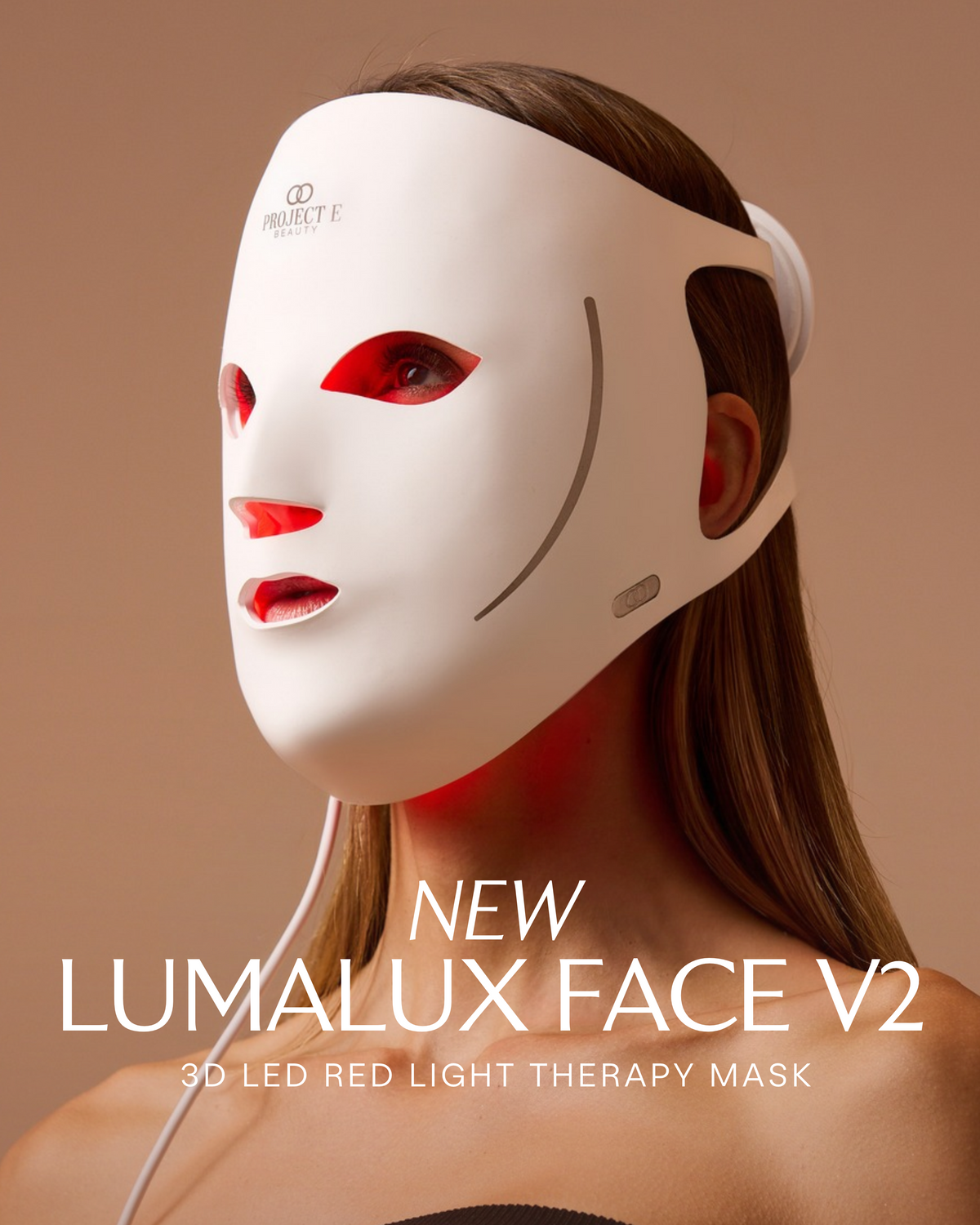
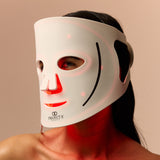
Used in this exampleLumaLux Face V2 | 3D LED Red Light Therapy Mask30 mW/cm² · 10 min · 18 J/cm² per session$899.00
Shop now
Dose (J/cm²) = Power (mW/cm²) × Time (s) ÷ 1000
Low dose: nothing turns on, no change.
Optimal dose: cells energize, collagen and repair speed up.
High dose: cells are overwhelmed and progress halts.
Illustrative curve for skin rejuvenation, based on the biphasic (Arndt–Schulz) dose response; typical therapeutic range 1–20 J/cm² Huang 2009 ↗ Huang 2011 ↗. Studies on breakouts have used different doses. Power is measured per LED LumaLux Face V2 specs ↗. Always follow the session time in your device’s instructions.
Measuring light
Most LED masks quote a power density in mW/cm², measured under a single LED. We measure that too, and then we look at how many LEDs deliver it across your face.
The industry standard, and we measure it too: a meter placed directly on a single LED, simulating contact with the skin, records the power reaching that square centimeter. LumaLux Face V2 delivers 30 mW/cm². On its own, though, it describes one LED, not the whole mask, so a mask with one LED and a mask with 1,000 can quote the same number.
30 mW/cm²Per LED: the same with 1 LED or 1,000
So we also measure coverage: how many LED bulbs sit over each square centimeter of treatable skin. Together with power per LED, it shows how much of your face actually receives that dose.
0.72 LDRRises with every LED that covers your face
Calculate your device’s LDR
A face is about 335 cm² (excluding eyes, nostrils and mouth). Face-and-neck masks cover more.
240 ÷ 335 cm² = – LDR
Power tells you how strong each LED is. LDR tells you how evenly that power covers your face. We look at both.
Illustration. Power per LED is shown at 30 mW/cm², the power density of LumaLux Face V2 LumaLux Face V2 specs ↗. LDR = LED bulb count ÷ treatable facial surface area (~335 cm², excluding eyes, nostrils and mouth).
Device design
Not all devices deliver light evenly. The key to consistent results is LED density and even coverage.
When LEDs are spaced too far apart or too few, their beams don't touch—leaving patches of skin that get zero energy and go untreated.
High-density devices pack LEDs close together so their light meets edge to edge, giving every millimeter of your face the same dose, without gaps or double-dosed hot spots.
How we measure density: the number of LED bulbs for every square centimeter of treatable skin. A higher LDR means more light sources, closer together, so light meets edge to edge and every area gets the same dose.
LDR = LED bulbs ÷ treatable facial area (cm²)
Light Density Rating (LDR) = LED bulb count ÷ treatable facial surface area (cm²), excluding eyes, nostrils, and mouth. Calculated using an estimated average treatable facial surface area of ~335 cm².LumaLux Face V2 specs ↗
This ensures your cheeks, forehead, and jawline all build collagen at the same rate, preventing patchy improvement.
Clinically studied wavelengths, matched to the concern you are treating.
Enough power for the session time, so every session lands in the optimal zone.
What to expect
Results vary depending on the concern addressed. Consistency of treatment is key to long-term and sustained skin results.
Relief from acne-prone skin, redness, and irritation may be immediate.
In one study, red light reduced wrinkle volume by 31.6% after 4 weeks. In another, acne lesions fell by 46% at 4 weeks.Mota 2023 ↗
Red and blue light reduced acne lesions by an average of 81% after 12 weeks.Goldberg 2006 ↗
The long-term collagen-boosting impacts of red and infrared light therapy may take 2–3 months to take effect fully.Wunsch 2014 ↗
Study figures are from independent, peer-reviewed research, not studies of Project E devices Mota 2023 ↗ Goldberg 2006 ↗. Individual results vary.
Safety
Unlike many topical treatments, LED light therapy is a gentle and non-invasive treatment option making it suitable for all skin types.Avci 2013 ↗
LED light therapy uses visible and near-infrared light, not ultraviolet.
If you take certain medication that increases your sensitivity to light or have had any serious skin or eye conditions it is best to consult a healthcare professional before starting LED light therapy treatments.
Like all electronic devices, LumaLux Face emits a small amount of non-ionizing electromagnetic fields (EMF). However, it is certified under IEC 60601-1-2, an international safety standard for electromagnetic compatibility (EMC) in medical electrical equipment.IEC 60601-1-2 ↗
Electromagnetic compatibility tested to IEC 60601-1-2 IEC 60601-1-2 ↗.
630nm red light wavelengths penetrate the epidermal skin layer to boost collagen production and smooth fine lines
Red and near-infrared light is absorbed by cytochrome c oxidase in the mitochondria, helping cells make more energy (ATP). de Freitas & Hamblin 2016 ↗ Hamblin 2018 ↗
Unlike many topical treatments, LED light therapy is a gentle and non-invasive treatment option making it suitable for all skin types. Avci 2013 ↗
If you take certain medication that increases your sensitivity to light or have had any serious skin or eye conditions it is best to consult a healthcare professional before starting LED light therapy treatments.
Like all electronic devices, LumaLux Face emits a small amount of non-ionizing electromagnetic fields (EMF). However, it is certified under IEC 60601-1-2, an international safety standard for electromagnetic compatibility (EMC) in medical electrical equipment. IEC 60601-1-2 ↗
No. LED light therapy uses visible and near-infrared light, not ultraviolet.
Results vary depending on the concern addressed. Relief from acne-prone skin, redness, and irritation may be immediate, while the long-term collagen-boosting impacts of red and infrared light therapy may take 2-3 months to take effect fully. Consistency of treatment is key to long-term and sustained skin results. Mota 2023 ↗ Wunsch 2014 ↗
Studies on skin rejuvenation typically use 1–20 J/cm² Huang 2009 ↗ Huang 2011 ↗. LumaLux Face V2 delivers 30 mW/cm² for 10 minutes, a dose of 18 J/cm² per session. Always follow the session time in your device’s instructions.
Not all devices deliver light evenly, and the key to consistent results is LED density and even coverage.
When LEDs are spaced too far apart or too few, their beams don't touch—leaving patches of skin that get zero energy and go untreated.
High-density devices pack hundreds of LEDs close together so their light cones meet edge to edge, giving every millimeter of your face the same therapeutic dose. This ensures your cheeks, forehead, and jawline all build collagen at the same rate, preventing patchy improvement.
LDR is the number of LED bulbs for every square centimeter of treatable skin. LumaLux Face V2 has 240 bulbs over about 335 cm², an LDR of 0.72. Calculate your device’s LDR.
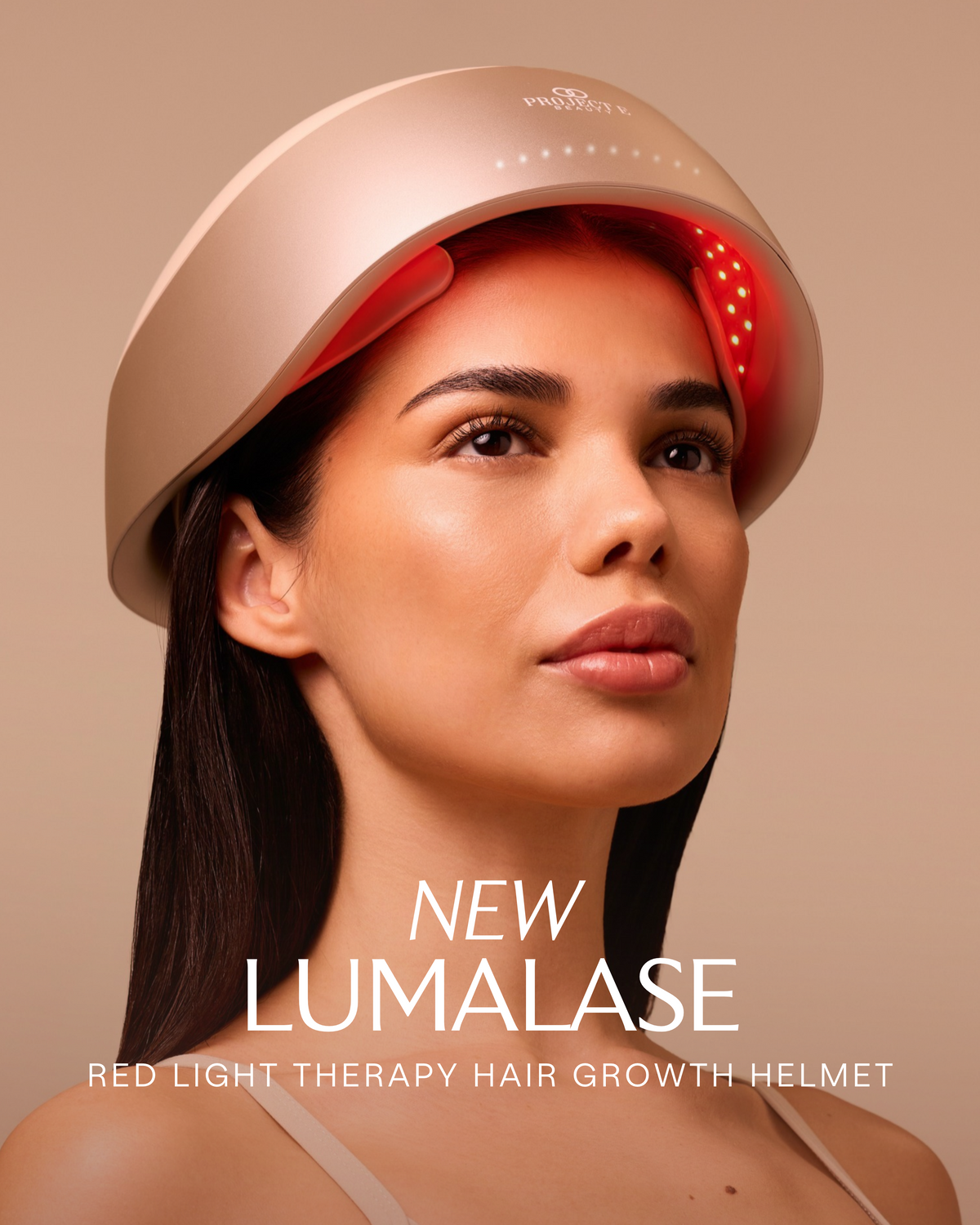
LumaLux Face V2, LumaLux Face+ V2 and LumaLase are FDA Cleared. Restora and Restora+ are FDA Registered. See our devices.
Sources
Every claim on this page links to one of these. Tap a source pill anywhere above to see the study’s design and key finding.
Our devices
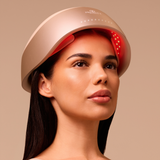
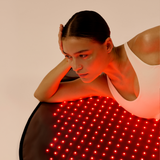
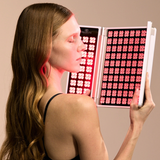
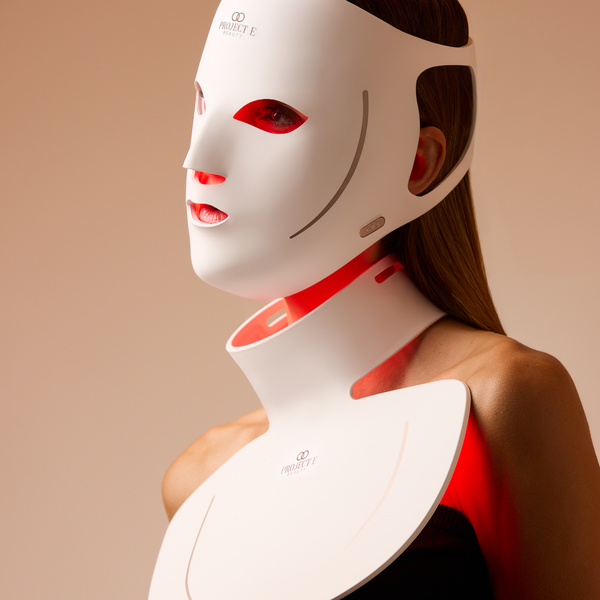
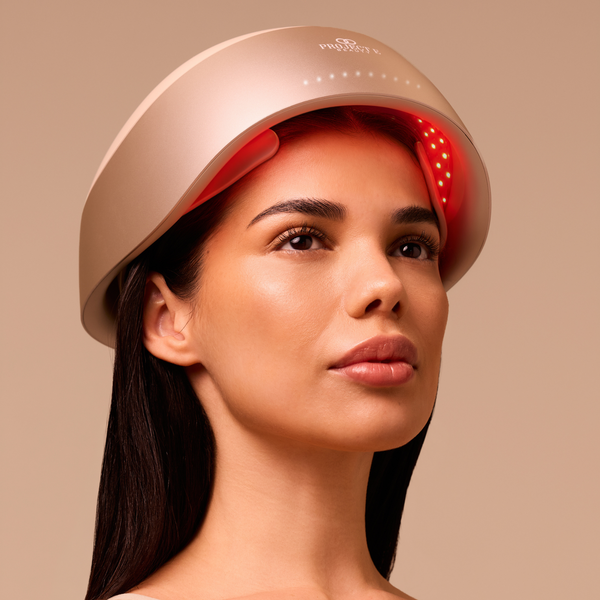
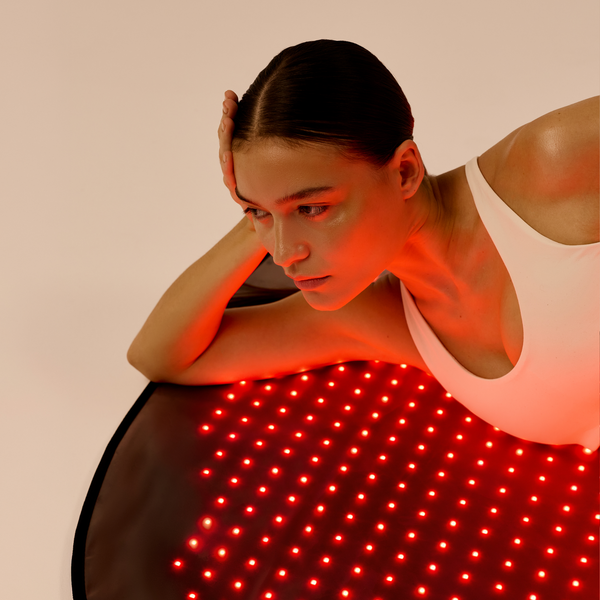
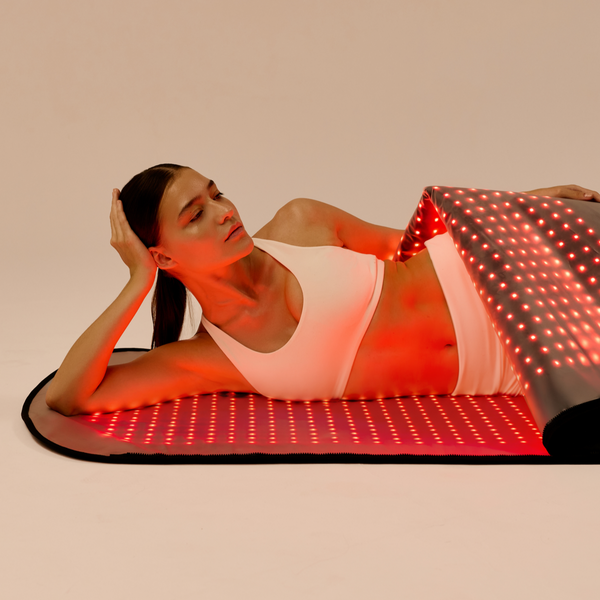
Every Project E light therapy device uses the wavelengths covered on this page.


FDA Cleared and FDA Registered are different FDA statuses. Each device shows the status it holds.